The trade fair that became the world's biggest ego machine
Here's a fact nobody on social media will tell you. The Amsterdam Dance Event did not start as a party for fans. It started in as a boring industry trade show.
DJs wanted to sell. Labels wanted to buy. Everyone wore cheap suits and exchanged business cards in fluorescent lit conference rooms.
And then something weird happened. The party crowd stopped being an afterthought and started becoming the product.
By year ten, ADE was no longer a trade fair with parties attached. It had flipped entirely. The industry now orbits around the fans.
I think about this a lot when I watch people post their ADE stories online. They are not selling music anymore.
They are selling a version of themselves. A cool one. A connected one. One that belongs to something bigger than their Tuesday night playlist.
The eight events that prove the machine is working perfectly
NRC picked eight must see events for this jubilee edition. And honestly the list is more revealing than any press release could be.
There are film screenings. There are art installations in abandoned warehouses. There are listening sessions where nobody dances at all.
And then there is the raw techno night you actually flew four thousand miles to experience. The one where your shoes are soaked by midnight.
That contrast is not an accident. It is a strategy so polished it looks like pure coincidence.
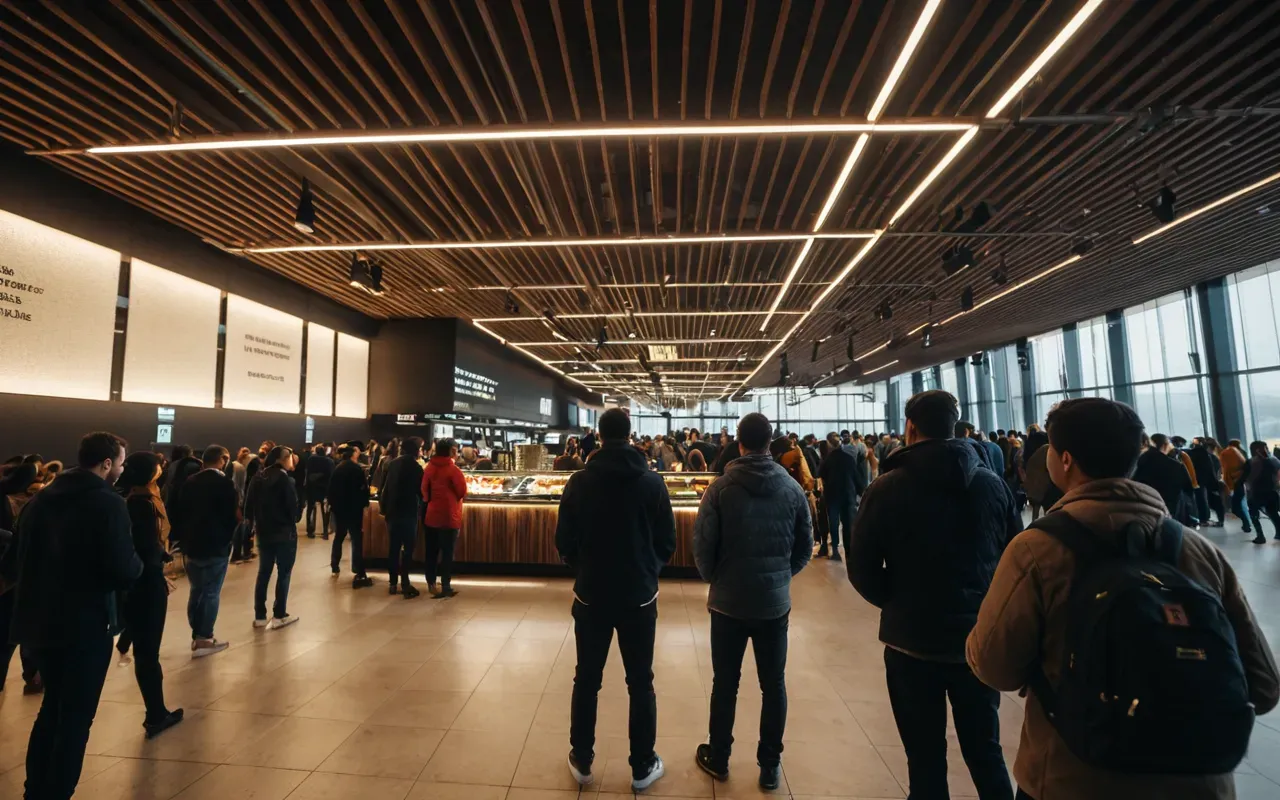
The film sessions attract creatives who would never step foot in a club. The art installations give Instagrammers something to photograph without dancing.
The listening sessions target the audiophile crowd who judge you for dancing too hard. And then the club nights catch everyone else.
Every single person who walks into that venue gets exactly the version of ADE they came to buy.
What thirty years of growth really costs the people inside it
Here is where I get uncomfortable. ADE has grown so large that the city barely recognizes it anymore.
Hotels triple their prices. Trams run every ninety seconds for one week. Neighborhoods that used to sleep through the night now vibrate at four a.m.
The people who built this scene in the nineties are watching their city become a theme park for themselves.
And I get it. If you grew up in that scene, the shift feels like a slow erasure of what made it real.
But the new generation does not know any other version. To them ADE has always been this massive global machine.
That disconnect is not a flaw. It is the entire business model working exactly as designed.
The real product was never the music and that changes everything you thought you knew about festival culture
Let me say this plainly. The Amsterdam Dance Event sells belonging far more than it beats.
You pay for a weekend. You get back a story you can tell at work the following Monday.
"I was in Amsterdam during ADE." That sentence carries weight. It says I am connected to something global.
The music is the vehicle. The identity is the cargo.
And once you see that clearly every event on the eight item list makes perfect strategic sense.
The film screenings are for the creative types who need cultural validation. The installations feed the visual economy.
The listening sessions are a status signal for people who want to be seen as sophisticated rather than just partying.
And the club nights are for everyone else who just wants to feel alive in a room full of strangers.
None of these audiences are wrong. They are just buying different things under the same brand.
Why this matters more for your next trip than you probably realize right now in the planning stage
If you are booking a trip around ADE dates right now there is one thing I wish someone had told me earlier.
The most expensive part of your trip is not the ticket. It is the week you have to live in a city that has completely changed its rules.
Hotels know it is ADE week. Airbnbs raise their nightly rate by two hundred percent minimum.
And if you have ever tried to book a hotel during a major event without reading the fine print first you already know how that goes.
I have seen travelers lose their entire reservation because of a clause they did not bother to read. It is heartbreaking.
The event itself will deliver exactly what it promised. The city around it may not be as forgiving.
So here is my honest advice. Book early. Read every cancellation clause twice. And lower your expectations about the city being normal for one week.
The machine is not broken. It is working beautifully. And the best part for you as a traveler is that it has no off switch.
Thirty years in. The trade fair is long gone. What remains is something far more powerful.
A global identity engine that runs on bass drops and belonging. And it is only getting faster.