A Quiet Rebellion Against Forgetting
Most history books treat migration as a statistic. A line on a graph. This new Amsterdam gallery, though, throws that cold distance right out the window.
Instead, it hangs fifty faces on the wall. Real people. Real lives interrupted and restarted around .
I walked into the Cultureel Educatief Centrum expecting a dry retrospective. What I got was an emotional ambush.
The Mayor opened the doors this October. But the real opening happened months earlier, in a darkroom.
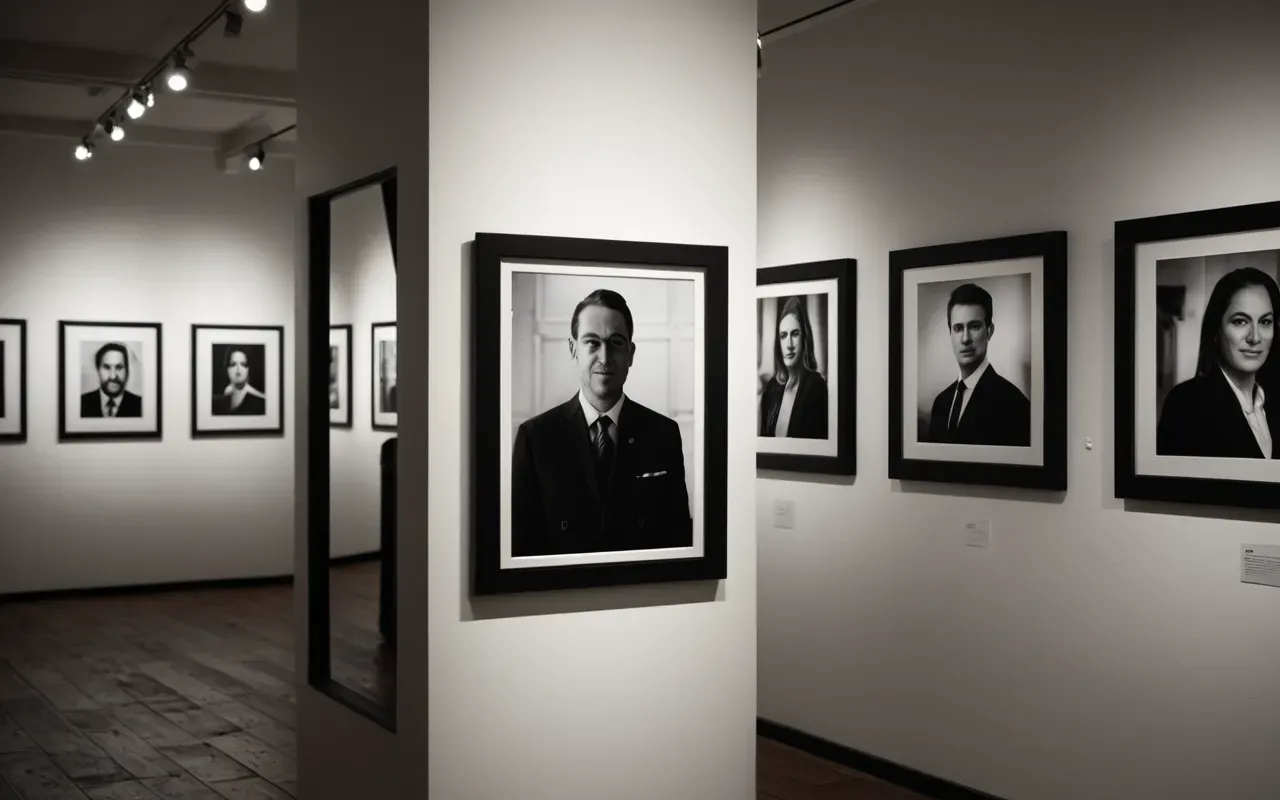
Photographer Asha Gaalman spent years chasing these subjects down. She didn't just take pictures, either. She listened.
Her camera caught the quiet dignity of people who left everything behind to start over in a new city.
This isn't about pity. It's about proof — proof that resilience looks like a human face.
Two Sides of the Same Coin
Here's what most reviews miss. The exhibition splits its fifty portraits into two distinct groups.
Twenty-five are the migrants. Afro-descendants, Indians, Javanese, Chinese, Maroons, and Indigenous peoples.
The other twenty-five are the locals who helped them land. Employers, teachers, lawyers, and volunteers.
That pairing is the genius of the curation. It shows migration as a two-way street.
You see the handshake. The shared meal. The moment of trust built over coffee.
Why This Changes How We See Integration
We usually debate integration in terms of laws and policies. Wrong lens.
Integration happens in the kitchen. In the classroom. In the church hall on a Sunday morning.
The texts accompanying these photos were written by Shawintala Banwari and others. They sound like friends talking.
No jargon. No academic distance. Just the raw texture of two lives colliding and merging.

I stood before one portrait for ten minutes. It showed a woman holding her child.
Her expression wasn't sad. It was determined. That's a feeling you cannot fake.
The Hidden Cost of Collective Memory
We talk about the past as if it's finished. But history has a way of biting back.
The exhibition highlights the shared legacy of slavery and indentured labor. These are not just old facts.
They shape who we hire today. They shape how we vote. They shape our food.
Ignoring this connection is a choice. And it has consequences that ripple through generations.
A Traveler's Guide to Emotional Depth
If you visit Amsterdam for the museums and canals, this is a different kind of stop.
It requires you to sit still. To read the small text. To look people in the eye.
It is not a quick photo op. It is an hour of quiet contemplation.
But if you're ready to understand the city beyond its postcards, this is where it begins.
The doors are open in October. After that, this story travels to other cities.
What We Learn From the Faces on the Wall
The biggest lesson is that identity is not a fixed point. It is a process.
These fifty people did not just arrive in a new country. They helped build it.
Their stories remind us that every community is a mosaic of individual choices made under pressure.
So next time you hear about migration statistics, remember the face behind the number.